Plumbing companies have a simple phone problem with complicated consequences: the phone can ring while the owner is driving, a technician is under a sink, the office is helping another customer, or the business is closed for the day.
An AI receptionist can help by answering the call, collecting the information the plumbing company needs, and giving the team a clear record for follow-up.
The goal is not to make an AI act like a plumber. It is to make sure the caller can explain what is happening, identify where service is needed, and reach the company’s next step without relying on voicemail alone.
What an AI receptionist can do for a plumbing company
A practical plumbing intake can collect the caller’s name, callback number, service address, a plain-language description of the problem, and the timing the caller is asking for.
That is useful because the plumber or dispatcher can return the call with context instead of starting from a vague message such as “call me back about a leak.”
Where human judgment matters
An AI receptionist can record what the caller reports, but technical advice, dispatch decisions, job acceptance, safety instructions, and repair recommendations belong with qualified people.
If a caller describes a possible safety issue, active property damage, a shutoff question, or another situation that needs professional judgment, the call should follow the plumbing company’s established escalation path.
The receptionist’s job is to make the handoff easier, not to diagnose the plumbing problem.
After-hours and overflow calls
Plumbing demand does not always follow office hours. Some businesses need full after-hours coverage. Others mainly need help when the team cannot answer every ring.
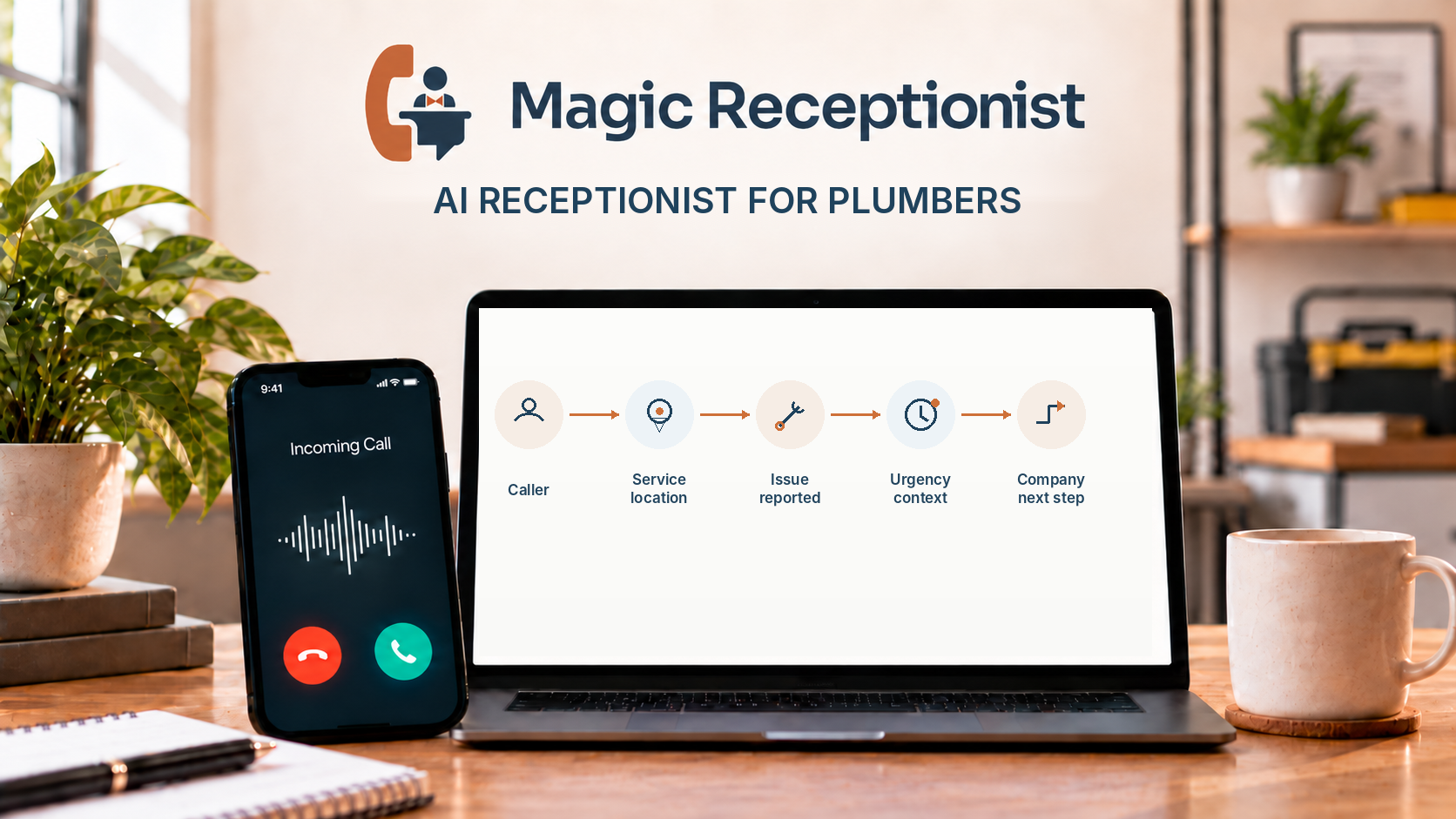
A useful after-hours intake usually starts with five questions:
- Who is calling and what number should the business use to reach them?
- Where is the service location?
- What is the caller reporting in their own words?
- How urgent does the caller believe the situation is?
- What would the caller like the company to do next?
From there, the business can decide which calls become callbacks, which should reach an on-call person, and which can wait for normal business hours.
Why this is more useful than voicemail
Voicemail records whatever the caller chooses to leave. An AI receptionist can ask the same useful questions on each call and organize the answers into a more complete service-request record.
That can reduce the first round of back-and-forth and make it easier for the team to prioritize the response.
What to decide before using it
Intake questions
Decide what information the team actually needs before returning a call. Keep the questions short enough that callers will answer them and useful enough that staff can understand the request.
Escalation
Identify the situations that should reach a person quickly and decide who receives them.
Booking, transfers, and notifications
If the business wants appointment requests, transfers, text or email notifications, or CRM delivery, decide how each action should work before depending on it.
Service area
Make sure callers can be identified by location so the team can quickly see whether the request falls inside the company’s normal service area.
Testing
Run realistic calls: routine service, after-hours requests, unclear callers, wrong numbers, urgent-sounding situations, and calls that need a person.
Can it schedule plumbing appointments?
It can support appointment requests and, when a scheduling workflow is connected, direct booking can be part of the call path. If the business prefers to confirm appointments manually, the receptionist can collect the caller’s preferred timing and send it to the team.
Can it support multiple technicians or service areas?
Yes, the intake can collect location and service information that helps the business route work. The company still decides technician assignment, service-area rules, dispatch priority, and job acceptance.
If you are also working on how customers discover the business before they call, read AI Search Is Already Here: What Local Businesses Need to Know for the discovery side of the same customer path.
Bottom line
For a plumbing company, an AI receptionist is most useful as a dependable first-line intake system. It helps customers reach the business when the team is busy, captures the context needed for follow-up, and keeps plumbing judgment with the people who actually do the work.